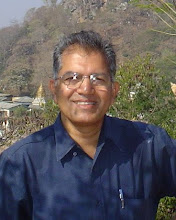
Besides the seminar we had with Peter Henrici, SJ (reading Blondel's L'action, where he taught us to use a set of methods for interpreting a philosophical text), I also attended his "Un discorso filosofico per la teologia." This was something amazing: students would turn up from all the Roman universities around, sitting on the window sills and on the floor... classes were packed and electrifying. Henrici would walk in carrying 5 or 6 large books, Plato in Greek and so on, and he was amazing. He took us from the Pre-socratics up to Heidegger and beyond. I used to think: perhaps Heidegger had that kind of effect on his students. a pity that I was in my first roman semester, and could follow only that much Italian. i have vague notes somewhere... but what he said did have an effect. As also his seminar - I tried to use the methods in my doctoral work. I guess they belonged to the "minor methods" of the upper blade, while Lonergan concentrated on method in a larger sense...
Showing posts with label Heidegger. Show all posts
Showing posts with label Heidegger. Show all posts
Saturday, 5 March 2022


Thursday, 9 April 2020
Byung-Chul Han and Lonergan on correlation
By chance, Rossano Sala. The visit to his mezzanine office. The gift of his book, L’umano possible (his PhD thesis), and Byung-Chul Han’s L’espulsione dell’Altro (the author is Korean, writes in German).
Han 10 attacks correlation: correlation means: If A, then often B. But one does not know why it is like that. Correlation is the most primitive form of knowledge, which is not even able to identify the causal relation, the relation between cause and effect. It is like that. The question about the why of things becomes superfluous. Nothing is therefore, understood. But to know is to understand. In this way the big data make thought superfluous. We entrust ourselves without hesitation to It’s like that.
The paragraph begins this way: even the greatest accumulation of information (the big data) yields a very reduced knowledge. On the basis of big data, correlations are identified. [Algorithms?]
But put this in relation to Lonergan’s take on correlation. L does not despise correlation. And he does not identify “cause” with “efficient cause.” He finds place – and here he is so unlike Heidegger, and perhaps now Han – for the knowledge that characterizes empirical science. He finds place for correlation. Empirical science is based on correlations. Pure empirical science, as opposed to technology, is not directly interested in efficient causes, it concentrates on formal cause – which is the form of the thing, the object of understanding…. Now that is a very different approach.
See Insight, CWL3:101: immanent intelligibility, formal cause. P. 62: correlations, measurements, things related to one another.
Lonergan's great distinction, which I have not found in others, is between experiential and explanatory conjugates. Experiential conjugates: things as related to us: colours as seen, sounds as heard, etc.
Explanatory conjugates: things as related among themselves. Here the key step is measurement. the difference between heat as felt and temperature, which is a correlation of correlations.
When people like Han ignore this, they are indulging themselves on the level of description, however sophisticated.
Then of course there is a difference between Aristotelian science and modern science.
Han’s notes figure Heidegger and Scheler. Baudrillard, Kant, Nietzsche. Hegel, Adorno, Blanchot. Lévinas, Sartre, Zizek, Foucault. Kafka, Orwell.
Thursday, 17 December 2015
Conversation with Fred Lawrence
Sunday, August
25, 2013
Conversation with
Fred Lawrence on the return journey from Galilee.
FL suggested a
paper on the Trinity. I could not follow all of what he said, but this seems to
be it: most people begin with persons and go on to the three relations which
are persons. They tend to forget the relations of origin – which are two. These
are the intelligible emanations. This would not be so bad if it were not for
the fact that this governs most of what follows. “The hypothesis [which one?]
governs most of what follows.” Lonergan: about the most blessed Trinity: 4
relations, 3 persons, 2 emanations, 1 God, no understanding. Notional ??
something.
This probably in connection
with my remark that Ratzinger and Augustine / Thomas / Lonergan are asking
different questions.
Augustine: the
first person to come up with an analogy that is properly spiritual.
Remarks on Al
Ghazali: he respects reason, but also knows that one has to go beyond reason. Meaning?
[not supernatural but] that beyond reason there is love, the love of God.
About Heidegger.
Leo Strauss, being a Jew, said that H was the greatest philosopher of the 20th
century. Hannah Arendt and Hans Jonas found a way of forgiving and reconciling
with H: he did not know what he was doing.
H was ambitious as
a young man. he was small of stature, but he could, already when young, wrap
people around his little finger. He was the bright young thing as a Catholic
seminarian, chosen for ?? by his bishop.
He told Engelbert
Krebs: the system of Catholicism is something I cannot accept. But I do not
stop being Christian.
1919: the reading
of Augustine. He found all his key BT concepts in Augustine. The next year:
Aristotle. He said he found many things of Augustine in Arisottle, minus the
Christian context. So he found a way of pulling Augustine out of his Christian
context. That was BT.
Later he rejected
the transcendentalism of BT: Dasein was too much the centre. Man is more
receptive than at the centre. That is one of the reasons why he was unable to
apologize for his Nazi involvement.
Why did he go with
the Nazis? Because he had ambitions. One of them being that of being Plato’s
philosopher king. He hoped that by joining a political wagon, he might be able
to transform German education. In 3 months he was disillusioned. He went to a
meeting of top German educationalists, and found that they wanted something
completely different from what he wanted.
And John of St
Thomas / Deeley. Representationalist. Mirroring. They do not know the activity
of questioning and insight on the two levels. They place all their weight, the
weight of objectivity, on the representation, and they do it by trying to
reduce all the subjective side. That is why the phenomenologists reject them:
they neglect the intentionality side of things.
Friday, 20 November 2015
George Steiner on Heidegger
Steiner, George. Heidegger. Fontana Modern Masters, ed. Frank Kermode. London: Fontana Press, 1987. First published 1978.
Some quotes from it:
"It means ... that nothing very confident can be argued with regard to at least two of the most vexed topics in the whole study of Heidegger's accomplishment: the debate on whether or not there occurs a fundamental change or 'turn' (Kehre) between the author of Being and Time and the later Heidegger ... and the even sharper controversies on Heidegger's implication in Nazism." (10)
The passage that you might be interested is this: "Only conjecture is possible. Allegations of anti-semitism are, in respect of the magnitude of the case, trivial, but also, I believe false. I have been unable to locate anti-Jewish sentiments or utterances in the works of Heidegger, even in those of a public and political nature - a fact which, from the outset, isolates him from the mainstream of Nazism. If Heidegger was, on certain obvious levels, a great man, a teacher whose philosophic-linguistic activity literally towers over various aspects of contemporary speculation, he was, at the same time, also a small man. He led his existence amid a worshiping coterie and, particularly in his later years, behind barriers of adulation. His sorties into the world at large were few and carefully orchestrated. It may well be that he did not have the courage or magnanimity needed to confront his own political past, and the question of Germany's espousal of barbarism." (119)
On google books, a different edition is available.... the above page 119 appears on page 124: https://books.google.co.
Friday, 21 August 2015
Edith Stein, joy and gift
Heidegger-Stein,
la gioia contro l’angoscia
Pier Luigi Fornari. 5 March 2014.
http://www.avvenire.it/Cultura/Pagine/heideggere-stein-la-giogia-contro-angoscia.aspx
Il
convegno / L’Antropologia filosofica di Edith
Si apre giovedì 6 marzo alla Lateranense, con un saluto del rettore, il vescovo Enrico dal Covolo, il convegno internazionale sulla antropologia filosofica di Edith Stein. Introdurrà il prorettore Patrick Valdrini, che presiederà la prima sezione nella quale Angela Ales Bello tratterà delle "radici husserliane dell’antropologia filosofica della Stein". Hanna Barbara Gerl Falkovitz, rintraccerà la concezione dell’esistenza come dono nell’opera di Santa Teresa Benedetta della Croce. Venerdì Hans Reiner Sepp (Università di Praga) terrà una relazione sul tema della persona, e Jean-François Lavigne (Nizza) sull’intenzionalità e l’essenza dello spirito. Nel pomeriggio Antonio Calcagno, (University College di Londra) analizzerà l’evoluzione del concetto di comunità nell’opera della Stein, e Daniela Verducci (Macerata) la metterà a confronto con quella di Max Scheler. Presiederanno rispettivamente le 3 sezioni del 7 marzo: Ulrich Dobhan Ocd, direttore dell’Edith Stein Jahrbuch, Gianfranco Basti, decano di filosofia della Pul, Jacinta Turolo Garcia Ascj (San Paolo in Brasile), e Luisa Avitabile (Cassino). Concluderà i lavori la Ales Bello. Il convegno corona una serie di lezioni tenute da Ales Bello, Nicoletta Ghigi, Anna Maria Pezzella.
Gioia versus angoscia. Chi volesse semplificare al massimo il confronto tra Edith Stein e Martin Heidegger potrebbe trovare in questa opposizione un’immagine efficace della diversità del loro pensiero. Una rappresentazione che stride evidentemente con la conclusione tragica della vita terrena di santa Teresa Benedetta della Croce e il successo incontrastato (incontrastato perfino dal dibattito sulla qualità e l’importanza del suo coinvolgimento nel nazismo) di cui il filosofo della Foresta Nera ha goduto e sembra godere anche in università e circoli culturali cattolici.
Purtroppo poco meditata e studiata è l’intensa interlocuzione filosofica che la fenomenologa di origine ebraica ha intrattenuto con l’autore di Essere e tempo: grande attenzione al suo pensiero, concordanze, ma soprattutto lucidissima critica. La Stein, tra l’altro, rimprovera a Heidegger di mitizzare il nulla [mythologische Redeweise] «come se si parlasse di una persona da aiutare una a ottenere una volta per tutte un diritto negato da sempre».
E ancora gli imputa di aver concepito la temporalità e la finitezza dell’uomo come «catenaccio», per una sorta di suo «risentimento» anticristiano [antichristlicher Affekt], motivato forse dalla volontà di cancellare la fede che aveva ereditato.
Oltremodo opportuno, dunque, per approfondire questi e altri attualissimi temi, il convegno che prende l’avvio domani a Roma, alla Lateranense, sull’antropologia filosofica di Edith Stein, con la partecipazione di esperti di primo piano a livello mondiale. Ad aprire e concludere il convegno sarà Angela Ales Bello, iniziatrice e guida in Italia degli studi sulla santa filosofa, e ora direttrice dell’Area internazionale di Ricerca Edith Stein nella filosofia contemporanea, attivata da un anno dalla Lateranense. Proprio in tema di rapporti con Heidegger, la relazione di Hanna Barbara Gerl-Falkovitz, illustrerà come la filosofia della Stein non abbia nulla da invidiare alla suggestiva meditazione di Jean Luc Marion sul "dono".
Proprio un’analisi fenomenologica dell’essere umano, nella sua finitezza e nella sua temporalità, invece, come argomenta la studiosa tedesca, consente alla Stein di elevare il pensiero a un Essere Eterno. «Questa apertura della riflessione – osserva la Gerl – porta la Stein oltre il pensiero dell’essere di Tommaso, oltre quello dell’Io di Hussserl a quello di Agostino sulla relazione: in essa si rivela il carattere di dono dell’esistenza, e in risposta, l’abbandono a una Persona Eterna e l’accoglienza attraverso una Persona eterna».
Si apre così una "breccia" nell’ontologia: dal concetto di essere a quello più ricco di Persona. Pur nella finitezza umana, conclude la docente della Hochschule filosofico-teologica dell’Austria citando la Stein, «il conoscere amare e servire, e la santa gioia nel conoscere, amare e servire, è al contempo un ricevere e accettare, è libero dono di sé a questa vita donata».
È in gioco dunque una visione antropologica, tema oggi quanto mai strategico nella salvaguardia dell’umano e delle sue istituzioni fondamentali, come il matrimonio e la famiglia. Su questo terreno, significativamente, può essere individuato uno spartiacque tra Edmund Husserl e la Stein, da una parte; e Heidegger, dall’altra, come dimostrano gli studi della Ales Bello. Seppur l’iniziatore della fenomenologia e il suo assistente si scambino reciprocamente accuse di "antropologismo" ricorda la fenomenologa italiana, di fatto Husserl si colloca nel solco della antropologia di San Paolo: l’uomo è corpo, anima e spirito. «Una concezione assolutamente insufficiente», replicherà Heidegger, bocciando tutto l’orientamento dell’antropologia greco-cristiana, che ha coniugato la definizione dell’essere umano come animale razionale con l’essere e l’essenza di ordine teologico.
«È stata comunque la Stein – sottolinea la ex decana di filosofia della Lateranense – a contribuire in modo determinante alla nascita della antropologia filosofica, ancora sconosciuta negli anni ’30, e a conferire alla disciplina questo nome». La fenomenologa che Giovanni Paolo II volle patrona d’Europa, supera, integrandola, l’antropologia concepita come scienza della natura, e studia l’essere umano in quanto essere spirituale. «Non basta perciò – aggiunge la Ales Bello –, riferirsi alle cosiddette scienze dello spirito, ad esempio la storia, il diritto, le quali non sono altro che prodotti dell’attività spirituale, ma è necessario esaminare che cosa sia lo spirito, all’interno della complessa stratificazione dell’essere umano».
Non a caso nelle prime pagine della Struttura della persona umana, testo preso in esame nel primo anno di vita dell’area internazionale di ricerca sulla Stein, la filosofa avverte che è impossibile fare opera pedagogica se l’uomo è concepito solo come «un essere gettato di fronte al nulla» (Heidegger) o come un fascio di istinti (psicologia del profondo). «Ci si deve domandare che senso possa avere una chiamata a una esistenza che viene dal nulla e va verso il nulla», osserva la Stein, avversando l’idea che un educatore possa farsi difensore di questa chiamata presso i giovani. Osservazioni probabilmente dettate anche dal clima che stava montando in Germania in quei giorni. Una ragione in più, per la Stein, per fondare l’azione educativa sulla metafisica cristiana. Un altro terreno di contrasto con Heidegger, che liquidava una filosofia che assumesse una tale qualifica come «ferro ligneo».
Friday, 19 December 2014
The bridge that does not exist
If I affirm an object, it exists.
if i affirm myself, i exist.
what i am doing here is: affirming an object as real, as being; affirming a subject as real, as being.
if i can make the further judgment that the object is not the subject, i have objectivity.
of course, i could specify further: in what way is the object not the subject? there is the objectivity of "2 + 2 = 4", of mathematical entities; there is the objectivity of a thought, or a dream; there is the objectivity of a snake that enters a goa house... of a new planet that someone claims to have discovered...
Descartes assumed that he knew the self in an apodictic way. he assumed also that he did not know any object in an apodictic way. hence his problem, the problem which we call the bridge.
he did not bother to engage in a detailed study of what was happening when he was knowing.
not that there is no difference between affirming the self and affirming an object that is not the self. there is a difference. but - and here is where each one has to get clear for himself - it is possible to know objects, and we do it a thousand times.
here you could in an idle moment read my notes on Heidegger (hermeneutics). Here you could reflect on Wittgenstein's unique handling of the problem.
one of Descartes' problems was his mathematical training: he expected, wrongly, mathematical certitude for everything. Even Rorty says that: Descartes was like the undisciplined child who does not know when to stop asking questions. (And Rorty, surprisingly, quotes Gilson quoting Descartes!) (I have this in my Rorty article.)
do we have mathematical certitude w.r.t. the reality of the self? not exactly. but to deny the self is to engage in a performative contradiction. (you can deny the self. the conradicition is not logical. it is performative: beween saying and performance, or reality, if you wish.)
do we have mathematical certitude w.r.t. objects like a cat and a mat and a tree and a dog and ohther subjects? no. do we need such certitude? no. do we have the self kind of certitude in these cases? no. but we do come to the point where to ask furhter questions would be plain foolish (even Rorty!). "the spade hits rock" Wittgenstein says. Absence of further relevant questions, L says. physical certitude, perhaps the Thomists would say...
If you need some references:
Hermeneutics and Method, p. 26 para 2.
Verbum cwl 2, p. 98 last para.
Insight, cwl 3, p. 401 last para. the pseudo-problem of transcendence.

Friday, 14 December 2012
Interpretation, violence and gift
Heidegger's phrase keeps coming to mind this morning: "Man is the violent in the midst of the overpowering." I think the phrase is from What is Metaphysics? and the context is interpretation. Interpretation - or understanding - is an act of violence, and the Overpowering here is Being. There seems to be a double violence here, or at the very least, Being does not seem benevolent.
Lonergan would, of course, think of the event of understanding as a happening, a pati, something not completely under our control, something that cannot be commanded by an act of will, though it can certainly be made more or less probable by what we do or fail to do. Understanding and interpretation here is, therefore, something that we are gifted with, something we receive, something that we are not masters of. A quite different approach, though one that certainly finds echoes in Heidegger's lifelong efforts to decentre the subject and to pinpoint or evoke the complex way in which the human being exists and acts.
Gift is emerging as a great theme in the contemporary West, thanks to the work of Marcel Mauss, but also thanks to John Paul II's stress on oblative self-sacrificing love. If life is gift, then the deepest meaning of being is self-giving. (I need to check the Blackwell Companion to Postmodern Theology for other echoes.)
But is there a streak of violence in proportionate being at least? Nature red in tooth and claw, as someone has said?
And is there a way of connecting gift with freedom, the type of freedom that John of the Cross talks about when he says, Ni temer las fieras, ni coher las flores? The freedom that characterizes Jesus, walking tall in the midst of the pains and the joys of human life?
Wednesday, 4 April 2012
Gelassenheit
Gelassenheit is borrowed from Eckhart: see Carlo Angelino, “Il religioso nel pensiero di Martin Heidegger,” in Martin Heidegger, L’abbandono, tr. Adriano Fabris (Genova: Il Melangolo, 1986) 19.
Tuesday, 6 March 2012
The relationality of humans, world and language
In his chapter on Heidegger Arthos has the following rather dense sentence:
And this relationality is penetrated by human finitude: "the frailty and possibility of human finitude." It is constructed out of a generative-destructive dynamic that the simple eternity or endlessness of the Moebius loop cannot represent.
Heidegger here has in mind the withdrawal and manifestation of Being. But I am thinking not so much of this dialectic, but of the other, the dialectic of joy and sorrow, much of which cannot be Said when the Time is not Ripe.
The relationality of humans, world, and language is saturated with the frailty and possibility of human finitude, and so constructed out of a generative-destructive dynamic the continual loop [the Moebius strip] does not have, simultaneously withdrawing into abysms and accreting by revelation. (Arthos, The Inner Word 208)When I alight from the bus and face the fields and the hills of home in the green distance, the 'relationality of humans, world, and language' comes alive to me. Those green hills are not just green hills. They are the interpenetration of humans, world and language. They mean something to me. To this I who is part of a We, a family, a people, a culture, a history.
And this relationality is penetrated by human finitude: "the frailty and possibility of human finitude." It is constructed out of a generative-destructive dynamic that the simple eternity or endlessness of the Moebius loop cannot represent.
Heidegger here has in mind the withdrawal and manifestation of Being. But I am thinking not so much of this dialectic, but of the other, the dialectic of joy and sorrow, much of which cannot be Said when the Time is not Ripe.
Thinking and time
Sometimes I find myself thinking: if only I had the time, I would be able to do more, think more, write more. Like I did this morning: for some reason, I thought of taking Arthos' The Inner Word to my room, and relaxing with it there. It did work: allowing the mind to enter more fully, more slowly, into the matter. So perhaps: if I had more time, more leisure, I might have...
But then no: if I did not have any work, any commitments, to structure my time, I would probably waste my time. Thinking does not happen in a vacuum. It happens in the midst of a world, my world.
But didn't Heidegger have leisure, all the leisure in the world, to think, to write? Those long stays in the little hut in the Black Forest, those long walks along impossibly beautiful and solitary mountain paths.... How wonderful, I find myself thinking.
But then no: even the solitary Heidegger was actually thinking within the constraints of his situation. His impossibly constricted situation. His situation in which he had made his faux pas, his irretrievable step, which had then cast its shadow upon the rest of his life. It was within those very real constraints, his situation, his thrownness, that he was thinking.
There is no thinking in the abstract.
Monday, 5 March 2012
Heidegger and the inner word
Sean J. McGrath. "Heidegger and Duns Scotus on truth and language." The Review of Metaphysics (Dec. 2003). See http://findarticles.com/p/articles/mi_hb3545/is_2_57/ai_n29056570/pg_5/?tag=content;col1
Wednesday, 11 January 2012
Heidegger's formale Anzeige or formal indication
MAN AND WORLD
Volume 30, Number 4, 413-430, DOI: 10.1023/A:1004250206794
Heidegger's formal indication: A question of method in Being and Time
Ryan Streeter
http://www.springerlink.com/content/l0k4k1381g52w26r/
Abstract
For Heidegger, phenomenological investigation is carried out by formal indication, the name given to the methodical approach he assumes in Being and Time. This paper attempts to draw attention to the nature of formal indication in light of the fact that it has been largely lost upon American scholarship (mainly due to its inconsistent translation). The roots of the concept of formal indication are shown in two ways. First, its thematic treatment in Heidegger's 1921/22 Winter Semester course, Phenomenological Investigations into Aristotle, is examined to make clear what Heidegger silently assumes in Being and Time. Second, Heidegger's adaptation of Husserl's use of the term, indication, is outlined to clarify the concept even more. The enhanced understanding of formal indication granted by these two points leads to a better grasp of Heidegger's concept of truth, for formal indication and truth are mutually implied for Heidegger. Finally, it is suggested that the reader of Being and Time, on the basis of what formal indication demands, approach the work not as a doctrine to be learned but as a task always requiring further completion.
I need to understand better Heidegger's formale Anzeige. Reading Arthos, it appears to be suspiciously like Lonergan's heuristic structure. Arthos says it is akin to Gadamer's Richtungssinn. [Arthos, The Inner Word in Gadamer's Hermeneutics 283.]
Wednesday, 13 April 2011
Panikkar and Heidegger
It seems to me that Panikkar is drawing heavily from Heidegger, especially from his critique of Being as presence, his attack on Substance, and his critique of onto-theology; but Panikkar himself seems to opt for a more 'clearly' 'theistic' - or 'religious' - position than Heidegger himself.
Monday, 11 April 2011
Still reading Panikkar ...
Some days ago I was bored reading Panikkar. Today I find I am irritated. He jumps about, he is not serious. Or is it that he is - too profound? Or perhaps I am not in the mood to jump into the deep waters he is indicating - God and Being, God and Being and Person, and all that. Ground trod by, opened up by, people like Heidegger and Whitehead, to name just two. Heidegger who questioned the whole of the Western tradition's identification of Being and God, God and Being. Whitehead who questioned the primacy of substance, working out, I think, alternative categories, and certainly an alternative metaphysics.
But my impression reading Panikkar is that his objections, his problems w.r.t. evil, for example, are too - flippant, can easily be answered. He has made a straw man, a paper man, and he proceeds happily to demolish it.
But my impression reading Panikkar is that his objections, his problems w.r.t. evil, for example, are too - flippant, can easily be answered. He has made a straw man, a paper man, and he proceeds happily to demolish it.
Panikkar and onto-theology
I am surprised. Panikkar is smack into the middle of Heidegger ground: I think he is spinning out, in his own way, Heidegger's proscriptions of onto-theology. He does make reference to Heidegger from time to time.
There is also, interestingly, his first published effort on F.H. Jacobi. Jacobi also, if I understand rightly, made a disjunction between reason and faith: hence his leap of faith. According to De Smet, it was Jacobi's restriction of 'person' to the human being that led to the great translators of Sanskrit texts rendering nirguna as impersonal and saguna as personal.
So a nest of problems here: voluntarism; the disjunction between God, reason, Being; Duns Scotus; Heidegger (with his Scotist influences); Lonergan; Benedict XVI; Islam (with its tendency towards voluntarism); Hauerwas's proscriptions of Duns Scotus and postmodernism.
Friday, 11 February 2011
The happening of a work of art
"It is precisely in great art - and only such art is under consideration here - that the artist remains inconsequential as compared with the work, almost like a passageway that destroys itself in the creative process for the work to emerge." (Heidegger, "The Origin of the Work of Art," Cooper 237)
See Bhagavan Shree Rajneesh / Osho in The Messiah commenting on something similar: some works simply emerge from the artist - like Kahlil Gibran's The Prophet (and, I would add, Arundhati Roy's God of Small Things which, she says, just rolled off her typewriter with hardly any corrections). Osho also says that usually this happens once - perhaps the first time. The subsequent works betray effort, and never measure up to the first. This happened in the case of Gibran as well as Roy.
Note also that Heidegger - like Hegel - refuses to have anything to do with aesthetics as concerned with beauty.
Saturday, 6 November 2010
The hermeneutic tradition and its transformation
Ormiston and Schrift make a connection between Schleiermacher, Dilthey, Heidegger, Gadamer, Betti, Habermas and Ricoeur, and propose that Nietzsche challenges this tradition. (Gayle L. Ormiston and Schrift, "Editors' Introduction," Transforming the Hermeneutic Context: From Nietzsche to Nancy, ed. Gayle L. Ormiston and Alan D. Schrift [Albany: SUNY Press, 1990] 14.) This is an interesting reading! The book itself deals with the transformation of the hermeneutic context, meaning the transformation wrought by Nietzsche, Foucault, Derrida, Kristeva, and so on, of the tradition represented in the companion volume The Hermeneutic Tradition: From Ast to Ricoeur (Albany: SUNY press, 1990).
Which means that my notes are more centred on the tradition; I still need to get familiar with its breakup or transformation.
Which means that my notes are more centred on the tradition; I still need to get familiar with its breakup or transformation.
Sunday, 1 August 2010
Balthasar and Heidegger
Balthasar seems to be influenced by Heidegger. Rahner clearly is. Both are influenced by de Lubac. But their tendencies are opposed. How? What? Why?
It would seem that Balthasar both welcomes and unwelcome Heidegger. See: “O’Regan delivered a magnificent analysis of the complex relationship between Balthasar and Heidegger, citing both a ‘welcoming’ and an ‘unwelcoming’ of the latter in Balthasar’s theology. It was the unwelcoming which O’Regan was especially interested in, citing evocatively Balthasar’s conception of a ‘gigantic misremembering’ on Heidegger’s part which distorted the relationship between Heidegger and Christian thought.” Jones Irwin, “A Contemporary Platonic-Christianity? – On Radical Orthodoxy.” http://www.mic.ul.ie/stephen/vol12/Review.htm as of 2 August 2010.
See Rossi, Osvaldo. “Herrlichkeit e Sein: Heidegger nel pensiero di Hans Urs von Balthasar.” Communio: Rivista Internazionale di Teologia e Cultura 147 (1996) 94-105. [STS R F-35. 1996 (1).]
See Rossi, Osvaldo. “Herrlichkeit e Sein: Heidegger nel pensiero di Hans Urs von Balthasar.” Communio: Rivista Internazionale di Teologia e Cultura 147 (1996) 94-105. [STS R F-35. 1996 (1).]
The Catholic Heideggerian School
E. Przywara includes in the 'Catholic Heideggerian School': Rahner, J.B. Lotz, G. Siewerth, M. Muller, and B. Welte. (See A. Nicholas, From Newman to Congar, 1990, 214-5)
Friday, 25 June 2010
William Richardson, SJ
Met William Richardson at lunch. Richardson, great Heidegger scholar, spoke at a Lonergan Workshop a couple of years ago. Was wonderful to hear him: it just poured out of him. Of course, he said at one point: I just don't know what Lonergan means by the pure desire to know.
I asked Richardson about his contacts with Heidegger. He said yes, he had met Heidegger personally, and Heidegger was very good to him, contrary to other people's experience. He also said that he was happy with the new scholarship about the Young Heidegger. Better than all the stuff about his Nazism. I told him I had read the ACPQ issue on Heidegger, and had learnt a lot from it. What's your interest in Heidegger, he asked. I said I just was fascinated by him. I told him I had first begun getting an idea of what Heidegger was about from Walter Biemel's book. He said the book was good, and that Biemel was a charming man.
And where did you study? At the Greg, I said. What was your study of Lonergan? His hermeneutics, I said.
He said years ago, in the 60s, he had given a series of lectures on hermeneutics at BC, and Lonergan was part of the audience. I asked about Heidegger's hermeneutics: that he hardly seems to use the word. Yes, he said, but hermeneutics was underlying all that he did.
Later Misael said to me: You have been dining with an anti-Lonerganian! I said I had no problem. He was very kind. What did you tell him, Misael asked. I said I told him that I loved Lonergan and I loved Heidegger too. As Fred Lawrence had said at the conclusion of the Workshop: we need not be partisans of one thinker or another.
Kerry Cronin said that once Richardson had given a talk, and someone from the back of the audience got up and said: You have understood Heidegger well. That was Heidegger himself.
Richardson is 90, and still productive... Wonderful.
Subscribe to:
Posts (Atom)