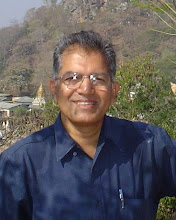
Besides the seminar we had with Peter Henrici, SJ (reading Blondel's L'action, where he taught us to use a set of methods for interpreting a philosophical text), I also attended his "Un discorso filosofico per la teologia." This was something amazing: students would turn up from all the Roman universities around, sitting on the window sills and on the floor... classes were packed and electrifying. Henrici would walk in carrying 5 or 6 large books, Plato in Greek and so on, and he was amazing. He took us from the Pre-socratics up to Heidegger and beyond. I used to think: perhaps Heidegger had that kind of effect on his students. a pity that I was in my first roman semester, and could follow only that much Italian. i have vague notes somewhere... but what he said did have an effect. As also his seminar - I tried to use the methods in my doctoral work. I guess they belonged to the "minor methods" of the upper blade, while Lonergan concentrated on method in a larger sense...
Showing posts with label Blondel. Show all posts
Showing posts with label Blondel. Show all posts
Saturday, 5 March 2022


Wednesday, 20 March 2013
Antecedents again
Pierre Rousselot influenced Henri de Lubac.
Von Balthasar was involved in the translation of Pierre Rousselot's Les yeux de la foi (1910) (dt.: Die Augen des Glaubens. Mit einer Einführung von Josef Trütsch. Aus dem Französischen übersetzt von Albert Mantel und Hans Urs von Balthasar. Einsiedeln: Johannes 1963)
Von Balthasar himself has a book on de Lubac: Henri de Lubac: Sein organisches Lebenswerk (Einsiedeln: Johannes Verlag, 1976); It. tr. Il padre Henri de Lubac: La tradizione fonte di rinnovamento, tr. Aldo Terrin (Milano: Jaca Book, 1978). In the very first sentence of the Preface he calls de Lubac "mio maestro ed amico." (11)
"Maurice Blondel, the Christian Philosopher that Cardinal Ruini Recommends. In the words of the one who knows him best, all the reasons that update the teaching of this unjustly forgotten philosopher. Interview with Peter Henrici." http://chiesa.espresso.repubblica.it/articolo/6916?eng=y
So: Blondel - Marechal - Rousselot - de Lubac - von Balthasar, with the qualifications about the first two, and a stronger link between the last three.
The Neo-Scholastic attempt was to explain doctrinal development in logical terms: the process of development was the logical process of making explicit what was merely implicit in revelation. Revelation here was clearly still understood as a set of propositional truths.
A major development came when Pierre Rousselot (1878-1915) suggested that revelation be conceived not as a sum total of distinct truths, propositions, judgments, but as a kind of knowledge that is indefinitely cashable (monnayable) in distinct ideas and propositions which explicitate it without being able to exhaust it, and without claiming to supplement it. Revelation, he proposed, was the living and loving knowledge that the apostles had of Jesus. The mode in which the many dogmas are precontained in the single changeless knowledge which is the apostolic deposit is not logical, but Christological. [Aidan Nichols, From Newman to Congar: The Idea of Doctrinal Development from the Victorians to the Second Vatican Council (Edinburgh: T&T Clark, 1990) 202.] De Lubac’s contribution to the question of doctrinal development is largely a restatement of that of Rousselot, whose papers he studied and published. [See I. Coelho, "The Tradition-Innovation Dynamic in Christian Doctrines," Tradition and Innovation: Philosophy of Rootedness and Openness, ed. Saju Chacklackal (Bangalore: Asian Trading Corporation, 2011) 225-265, at ??.]
De Lubac’s materials: the Fathers, the great Medievals, the Christian Platonist Maine de Biran, and Blondel. [Nichols 204.]
De Lubac rejected any view of ressourcement that scorned later development as decadent. [Nichols 205.]
When removed from teaching, de Lubac turned to the topic of doctrinal development. His chief contribution was a bulletin in which he expressed his views by criticising those of others, notably Neo-Thomists from Gardeil to Boyer. He distinguished his own views chiefly from the Logicism of Boyer. His positive remarks amount to a re-statement of Rousselot, who, being unpublished, was unknown. This bulletin would bear fruit in Rahner’s more massive exploration of the theme, and in the making of Dei Verbum. [Nichols 206. See H. de Lubac, “Bulletin de théologie fondamentale: le problème du développement du dogme,” Recherches de Science Religieuse 35 (1948) 130-160.]
Henri de Lubac was von Balthasar's teacher.
Von Balthasar was involved in the translation of Pierre Rousselot's Les yeux de la foi (1910) (dt.: Die Augen des Glaubens. Mit einer Einführung von Josef Trütsch. Aus dem Französischen übersetzt von Albert Mantel und Hans Urs von Balthasar. Einsiedeln: Johannes 1963)
Im deutschen Sprachraum wurden vor allem Hans Urs von Balthasar und Karl Rahner von Rousselot beeinflusst. ["Pierre Rousselot," Wikipedia, at http://de.wikipedia.org/wiki/Pierre_Rousselot, as of 20 March 2013]The Italian translation of Les yeux de la foi borrows subtitles from von Balthasar's translation; that translation has also served as a constant guide in the work of the Italian translation, as the editors / translators admit (see Gli occhi della fede, tr. Claudio del Ponte, presentazione di Ursicin G.G. Derungs [Milano: Jaca Book, 1977] 7).
Von Balthasar himself has a book on de Lubac: Henri de Lubac: Sein organisches Lebenswerk (Einsiedeln: Johannes Verlag, 1976); It. tr. Il padre Henri de Lubac: La tradizione fonte di rinnovamento, tr. Aldo Terrin (Milano: Jaca Book, 1978). In the very first sentence of the Preface he calls de Lubac "mio maestro ed amico." (11)
La voce 'dinamismo' ci da' l'occasione di dire qualcosa su coloro che sono stati gli animatori del pensiero di de Lubac; due nomi vengono immediatamente alla memoria: Blondel e Marechal. ... a loro si deve aggiungere il nome di Rousselot (che insegnava san Tommaso in modo nuovo). Ma a nessuno dei due si lego' de Lubac, nella misura in cui essi erano dei sistematici; da loro egli assunse solamente l'elan fondamentale.... (von Balthasar, Henri de Lubac 15)See also Antonio Russo, Henri de Lubac: teologia e dogma nella storia. L'influsso di Blondel.
So: Blondel - Marechal - Rousselot - de Lubac - von Balthasar, with the qualifications about the first two, and a stronger link between the last three.
Sunday, 17 March 2013
Antecedents
Talking with Gianni Caputa yesterday, on the way back from Nazareth, I learnt that von Balthasar was a disciple of Henri de Lubac. I know that de Lubac was himself influenced very deeply by Pierre Rousselot, whose unpublished work he edited for publication. See my paper, Tradition and Innovation in Christianity.
I was wondering about the connection between de Lubac and Blondel. A cursory search of the net throws up a book that i actually have, though in Nashik: Antonio Russo, Henri de Lubac: teologia e dogma nella storia. L'influsso di Blondel.
On the other hand, it might be interesting to explore De Smet's roots in Pierre Scheuer and Joseph Marechal.
Sunday, 19 July 2009
Blondel, Balthasar...
The other day Abp. Felix Machado said that Balthasar was a powerful name these days; almost all the big positions in the Vatican were being held by Balthasar people, and to study Balthasar, to be an expert in Balthasar, is to have a shortcut to the Vatican.
John Misquitta, SJ, said that Balthasar seems to be used as a stick to beat Rahner with; there has been, over the last few years, a concerted effort to discredit Rahner.
In fact, Balthasar is a big name even at the Gregorian these days; Rahner is hardly spoken of.
Of course, I think the names of Balthasar and Ratzinger were never even uttered in our theology days here in India... For some reason, these two names are not beloved on the Indian subcontinent, unless things are changing now.
But there was / is also a Blondel influence on the Gregorian. In my time there (1990-94) there used to be Peter Henrici, world-renowned Blondel scholar, as well as Xavier Tilliette, who is also in his own right a Blondel scholar, besides some others too. Henrici is a nephew of Balthasar's from his mother's side, and I think I remember him saying that Balthasar was influenced by Blondel.
So Blondel, Marechal, Balthasar, and so on: would be interesting to study those connections.
Bob Doran is of course trying to bring Lonergan and Balthasar people together; he himself and some of his students seem to be writing stuff on Balthasar. Fred Lawrence does not seem to be that keen on this particular connection. I think he feels Balthasar remains somehow too much locked up in the metaphorical, the figurative, the descriptive.
John Misquitta, SJ, said that Balthasar seems to be used as a stick to beat Rahner with; there has been, over the last few years, a concerted effort to discredit Rahner.
In fact, Balthasar is a big name even at the Gregorian these days; Rahner is hardly spoken of.
Of course, I think the names of Balthasar and Ratzinger were never even uttered in our theology days here in India... For some reason, these two names are not beloved on the Indian subcontinent, unless things are changing now.
But there was / is also a Blondel influence on the Gregorian. In my time there (1990-94) there used to be Peter Henrici, world-renowned Blondel scholar, as well as Xavier Tilliette, who is also in his own right a Blondel scholar, besides some others too. Henrici is a nephew of Balthasar's from his mother's side, and I think I remember him saying that Balthasar was influenced by Blondel.
So Blondel, Marechal, Balthasar, and so on: would be interesting to study those connections.
Bob Doran is of course trying to bring Lonergan and Balthasar people together; he himself and some of his students seem to be writing stuff on Balthasar. Fred Lawrence does not seem to be that keen on this particular connection. I think he feels Balthasar remains somehow too much locked up in the metaphorical, the figurative, the descriptive.
Subscribe to:
Posts (Atom)