Tuesday, 14 August 2012

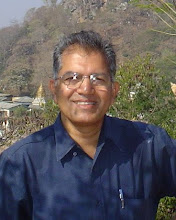
Uttam Kamble

Tony George mentioned two important books by Uttam Kamble (who gave a talk long ago, during the Youth Adhiveshan held in Divyadaan - at that time he was Editor of the Nashik edition of Sakala). The books:

Vata tudavatana
Ai samjhuna ghetana [Or: aai samjun ghetana. Translated as Ilanda's Story].


Bhaurao Bagul


I have just posted in Indian Christian Writings a note on Prof. Nazareth Misquitta, Principal of St Joseph's College, Rajodi, Virar. I want to note here that Prof. Misquitta is also an expert on Bhaurao Bagul, a Dalit writer, perhaps the Father of Dalit Literature in Marathi. Misquitta holds a doctorate on Bagul from the Mumbai University. He has published several books on Bagul.

Monday, 30 July 2012

The natural and the supernatural in the religions


Joaquim’s paper Jacques Maritain e la mistica natural Indiana,” a reworked version of the article we printed in DJPE, makes very clear the position of Maritain: Christian mysticism is supernatural; Indian mysticism is really an experience of the self, and purely natural. However, he does admit that there could be ‘mixtures’ – mystical experiences that have ‘touches’ of the supernatural. How, I have to read further to understand.
I was asking myself: how does this position compare with that of Lonergan? Perhaps this way. In his earlier writings, Lonergan would talk of natural, relatively supernatural and absolutely supernatural solutions to the problem of evil. In his later position, he would take the clear (Christian) stand that the actually realized dispensation is absolutely supernatural. He would go further and state that the absolutely supernatural gift of God’s love is given to all, and therefore is available / given in all religions. He would say clearly that, in their positive moments, all religions are fruits of the gift of the Spirit.
I am thinking now that even in his earlier position, on the hypothesis / faith assertion that the actually realized dispensation is the absolutely supernatural one, he might have envisaged such a position. It is not said, and he does not say clearly, that any religion is natural. Hoever, he does talk / imply that Islam has no place for the supernatural mysteries. But then the mysteries regard the content of faith, perhaps? That position, in that case, would not really exclude the possibility of a truly supernatural gift of God’s love given even in Islam.

Tuesday, 24 July 2012

Gandhi and Lonergan

In the context of Richard Howards and Joanna Swanger's forthcoming book, Gandhi and the Future of Economics: Imaginary Dialogues between Gandhi and Some Indian Intellectuals, I was thinking of a future dialogue between Gandhi and Lonergan. If Lonergan could contribute a spine of hardcore economic theory to Gandhian intuitions, we might have a viable alternative to support obvious good will (I am thinking here of Singh). I was thinking this morning: here is a government whose survival depends on controlling the prices; yet it seems unable to do it. So perhaps it does not know how to. What if someone were to say how? What is an economic science focused on prices were barking up the wrong tree? What if we need to recognize productivity as the generator engine of economic growth, distinguish two types of product, and systematically work out its implications?

Saturday, 21 July 2012

From substance to subject in Christ

Another anomaly: from substance to subject in Christ Jesus (see Lonergan, "Existenz and Aggiornamento," 1964), or from the vegetative living of being temples of the Spirit, members of Christ, adoptive children of the Father, to conscious living, spontaneous living, deliberate living, which is growth in prayer. [Lonergan, "The Mediation of Christ in Prayer," Philosophical and Theological Papers 1958-1964, CWL 6 (Toronto: University of Toronto Press, 1996) 179.]

The anomaly is this: does not Lonergan say elsewhere, and most of the time, that the gift of God's grace is itself conscious, even if not known?

Sunday, 24 June 2012

Sanctifying grace and charity

So what really is the question now? I thought it was regarding the place of consent in religious conversion, but that seems to be rapidly clarifying, though perhaps one or two details still need to be clarified.

The question really is: does the distinction between sanctifying grace and the virtue of charity carry over into a properly methodical theology, one which has overcome faculty psychology?

The religions - natural as well as supernatural

The anomaly has been, I think, satisfactorily resolved. The question now is, what has been gained, apart from the infinitesimal contribution to Lonergan exegesis?

I think: a clarification of the natural-supernatural debate about religions. Are some the religions merely natural? Are they supernatural? The traditionalists tend to say they are merely natural. The others tend to regard them as supernatural. Lonergan has this contribution to make: they are all of them fruits, at least in their positive moments, of the gift of the Spirit, which is the gift of God's love. As far as their beliefs are concerned, they might well be natural. In crude terms, we could say that the religions might represent a range of combinations of natural and supernatural, with the proviso that, "in the present order," all would be, at least in some sense if not in all their dimensions, absolutely supernatural.