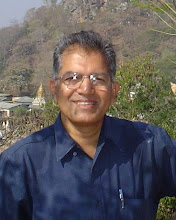
OLALEKAR Prashant. "Exploring Play: 'Out of the Box' Theologising." Vidyajyoti Journal of Theological Reflection 80 (2016) 774-800.
Showing posts with label interreligious dialogue. Show all posts
Showing posts with label interreligious dialogue. Show all posts
Tuesday, 15 November 2016


Thursday, 16 July 2015
Jesus, humanity, the cultures and the religions
Given our faith that Christ is not only the historical Jesus, but also at the same time the Lord who will come again, the process of the Christian Fact is not finished with the original event, even if it received from this event its definitive and permanent norms. If we were to move closer to the conceptions developed by the Greek Fathers, in their attempt to reach a global understanding of the Christian Fact, we could say that the process of the Incarnation, of the assimilation of the human on the part of the divine manifested in Christ, began in him, but did not end with him. Yet again, in other words, borrowing modern categories, we could express the same thing by saying that the encounter of humanity, starting with Jesus of Nazareth, continues as long as there are human beings; it is only in the course of this encounter that it can develop itself in all its possibilities. (J. Ratzinger, Il problema della storia dei dogmi nella teologia cattolica, Natura e compito della teologia: Il teologo nella disputa contemporanea Storia e dogma [Milano: Jaca Book, 1993] 118-119)
Earlier versions:
Das Problem des Dogmengeschichte in der Sicht der katholischen Theologie (Koln-Opladen: Westdeutscher Verlag, 1966).
"Il problema della storia dei dogma nella teologia cattolica," Storia e Dogma (Milano: Jaca Book, 1971) 11-34.
The highlighted text is extremely interesting for its world-ecumenical implications. If the assertion is true, then the encounter of humanity with Jesus continues in every religion, in every age, in every culture. And only in the course of this encounter can it develop and unfold in all its possibilities.
Tuesday, 6 January 2015
Challenges from the religions
The challenge from Hinduism: can the Absolute enter space, time, language (the world mediated by meaning)?
The challenge from Judaism and Islam: can God be beyond our reason? (the challenge of rationalism - allowing God to be truly God, to be beyond the normal human reach of intellect)
The challenge from Judaism and Islam: can God be beyond our reason? (the challenge of rationalism - allowing God to be truly God, to be beyond the normal human reach of intellect)
Tuesday, 3 December 2013
Selbstverstaendlichkeiten
From the 'dialogue' (not only interreligious) panel at the recent Gregorian International Lonergan Workshop in Rome: one of the questions, if I remember right, was: here we are, elites, speaking about high minded matters; but does all this affect the simple people in the bush? - And my response was: no, but yes. In a sense, no, because most people live in the world of undifferentiated consciousness (which is not to assume that we, just because we are 'scholarly', live in the world of theory). But in other ways, yes, because, first of all, even simple people do not live in a world of pure immediacy, but rather always in a world mediated by and constituted by meanings and values; and, secondly, because we just cannot assume that this world in which they live is 'innocent.' There is no first innocence anymore. Everyone, even the people in the bush, are somehow 'contaminated' - think of dominant cultures, the Selbstverstaendlichkeiten that seep down to every level, the influence of the media, and so on. There came to mind the Nicholas who I knew in Bosco Boys Home of long ago: so simply he told me, as he was going to see Ganpati: But brother, all religions are equal.
Monday, 4 March 2013
Authenticity, major and minor, and missio ad gentes
Thinking about Lonergan's distinction between major and minor authenticity, I was wondering: could we identify 'good conscience' with minor authenticity?
The distinction might also well be applied to missio ad gentes. We need not question the minor authenticity of people: they might well be good Hindus, good Buddhists, good Muslims. But proclamation of the Good News of Jesus raises the question of major authenticity.
Or perhaps: it may also raise the question of major authenticity - especially if the tradition in qustion has no place for such a revelation. E.g. the rationalism that seems to be to be inherent in Judaism and Islam - by which I mean that both these religions seem to me to remain within the bounds of what Catholics call 'natural theology', and there is the inbuilt temptation to say: nothing beyond, which where the rationalism thing comes in. Perhaps also Hinduism and Buddhism - though with these, especially with Advaita and Buddhism, the question of whether the finite can bear the weight of the infinite also comes in (here Ratzinger might be helpful).
The distinction might also well be applied to missio ad gentes. We need not question the minor authenticity of people: they might well be good Hindus, good Buddhists, good Muslims. But proclamation of the Good News of Jesus raises the question of major authenticity.
Or perhaps: it may also raise the question of major authenticity - especially if the tradition in qustion has no place for such a revelation. E.g. the rationalism that seems to be to be inherent in Judaism and Islam - by which I mean that both these religions seem to me to remain within the bounds of what Catholics call 'natural theology', and there is the inbuilt temptation to say: nothing beyond, which where the rationalism thing comes in. Perhaps also Hinduism and Buddhism - though with these, especially with Advaita and Buddhism, the question of whether the finite can bear the weight of the infinite also comes in (here Ratzinger might be helpful).
Sunday, 24 June 2012
The religions - natural as well as supernatural
The anomaly has been, I think, satisfactorily resolved. The question now is, what has been gained, apart from the infinitesimal contribution to Lonergan exegesis?
I think: a clarification of the natural-supernatural debate about religions. Are some the religions merely natural? Are they supernatural? The traditionalists tend to say they are merely natural. The others tend to regard them as supernatural. Lonergan has this contribution to make: they are all of them fruits, at least in their positive moments, of the gift of the Spirit, which is the gift of God's love. As far as their beliefs are concerned, they might well be natural. In crude terms, we could say that the religions might represent a range of combinations of natural and supernatural, with the proviso that, "in the present order," all would be, at least in some sense if not in all their dimensions, absolutely supernatural.
I think: a clarification of the natural-supernatural debate about religions. Are some the religions merely natural? Are they supernatural? The traditionalists tend to say they are merely natural. The others tend to regard them as supernatural. Lonergan has this contribution to make: they are all of them fruits, at least in their positive moments, of the gift of the Spirit, which is the gift of God's love. As far as their beliefs are concerned, they might well be natural. In crude terms, we could say that the religions might represent a range of combinations of natural and supernatural, with the proviso that, "in the present order," all would be, at least in some sense if not in all their dimensions, absolutely supernatural.
Tuesday, 26 January 2010
Tukaram and J.E. Abbott
Extraordinary chat with Tony George, SJ, yesterday. He is preparing a paper for a Tukaram symposium at Pune University. He has come up with a wonderfully creative approach.
The background is the usual attitude of Hindus. They feel that people like J.E. Abbott, the one who opened Tukaram to the West, are only subserving their Christian missionary goals. They feel Tukaram opens the way to introducing the gospel in India.
Tony takes a different approach. He begins from Cassirer's idea of 'soul-making.' All great literature is involved in soul-making. Tony's thesis is that the reading of Tukaram contributes to soul-making in the Christian. Abbott, for example, is a Protestant; he does not have much to do or say about the feminine aspects of the Christian mystery, because, being a Protestant, he has no place for Mary. Tukaram, instead, speaks of God as mauli, mother. The Protestant Abbott reading Tukaram is led, therefore, to fill a gap in his own religious experience. The paternal and masculine aspect of God is complemented by the maternal and feminine aspect from Tuka. So soul-making continues.
The Hindu, on the other hand, might find in the West and in Christianity a better appreciation of the social aspects. It is strange, Tony pointed out, that Tuka, despite calling God mauli, despised women. He thanks God for not giving him the body of a woman, for example. Here is something that Hinduism might learn from Jesus, who manifests a deep and extraordinary respect for women...
Wonderfully fresh and creative approach, one that I found very respectful, and yet talking about what two traditions might learn from one another.
The background is the usual attitude of Hindus. They feel that people like J.E. Abbott, the one who opened Tukaram to the West, are only subserving their Christian missionary goals. They feel Tukaram opens the way to introducing the gospel in India.
Tony takes a different approach. He begins from Cassirer's idea of 'soul-making.' All great literature is involved in soul-making. Tony's thesis is that the reading of Tukaram contributes to soul-making in the Christian. Abbott, for example, is a Protestant; he does not have much to do or say about the feminine aspects of the Christian mystery, because, being a Protestant, he has no place for Mary. Tukaram, instead, speaks of God as mauli, mother. The Protestant Abbott reading Tukaram is led, therefore, to fill a gap in his own religious experience. The paternal and masculine aspect of God is complemented by the maternal and feminine aspect from Tuka. So soul-making continues.
The Hindu, on the other hand, might find in the West and in Christianity a better appreciation of the social aspects. It is strange, Tony pointed out, that Tuka, despite calling God mauli, despised women. He thanks God for not giving him the body of a woman, for example. Here is something that Hinduism might learn from Jesus, who manifests a deep and extraordinary respect for women...
Wonderfully fresh and creative approach, one that I found very respectful, and yet talking about what two traditions might learn from one another.
Tuesday, 4 August 2009
An interreligious theological method
Again, since the sources to be subjected to research are not specified, they could be the sacred books and traditions of any religion. (B. Lonergan, "Bernard Lonergan Responds (1)," Shorter Papers, CWL 20: 274)This also had escaped me: the clarity with which Lonergan here indicates that his method can be used by all religions, or (implicitly) in an interreligious manner. So the interreligious data does not have to come in only at Communications, as I recall someone (McShane?) saying recently. But of course, this is self-interpretation, and anyone is free to challenge it - provided she has good reasons.
Subscribe to:
Posts (Atom)