Showing posts with label McShane. Show all posts

Thursday, 2 April 2015

Self-Knowledge, and Understanding

I am continuing here the point I was pushing in the previous chapter: the remoteness of serious understanding, and the problem, raised in the chapter on dialectic, of taking an honest stand about your stand regarding it. The honesty relates to the struggle towards genuineness, and it is sadly amusing to bring together two statements of Lonergan, one about the historian “at pains not to conceal his tracks,” the other talking about the self who “keeps matters some entirely to oneself, and refuses even to face others.”135 The “outer rind of the persona” 136 may well be eager to take a stand on the importance of understanding’s “bloody entrance,”137 but some hidden layer rejects this and, oddly, that hidden rejection can be quite manifest in that self’s attitude towards the effort to seriously understand, even going to the extreme of a certain stand about the inevitability of C.P.Snow’s two culture, a stand that fits nicely with “the substitution of pseudometaphysical myth-making for scientific inquiry.”138 So, one talks of feelings with disdain for chemistry.  
Such an exclusion of serious understanding is presently supported by the dominant traditions of contemplation, which are anaphatic. The new systematics, on the other hand, is to be increasingly kataphatic. Systematic searchings, in a later maturity, will, as a “Language of the Heart”, “as central feature of the world of sense, intimate its finality, its yearning for God.”139 (Philip McShane, http://www.philipmcshane.ca/method-02.pdf p. 77) 

Wednesday, 1 April 2015

The Salesian titanothore?

“But we are not there yet. And for society to progress towards that or any other goal it 78 140For a New Political Economy, 20. must fulfil one condition. It cannot be a titanothore, a beast with a three-ton body and a ten-ounce brain. It must direct its attention .... to the overhead product of cultural implements. It must glory in its deepening, in the pure deepening that adds to aggregate leisure, to liberate many entirely and all increasingly to the field of cultural activities .... It must lift its eyes more and more to the more general and more difficult fields of speculation, for it is from them that it has to derive the delicate compound of unity and freedom in which alone progress can be born, struggle, and win through.” [n.140: Lonergan, For a New Political Economy, 20.] [P. McShane,http://www.philipmcshane.ca/method-02.pdf, "Systematics."]
I am jotting this down, this fantastic comment from Lonergan, because it has all to do with my / our being Salesian at this moment in history. Is there or is there not place for the 'intellectual,' the theoretical, the mind? True, I have been emphasizing the Way of the Heart, which is what we miss. I have been saying that we have shored up enough the Way of the Mind. And that is true, but only in a sense: we have the structures, and by now the average provincial does not think twice about having to set aside persons for 2 or 3 years for a master's degree or a doctoral degree in philosophy or theology and sometimes salesianity and spirituality. But: as a congregation, do we really think, reflect, and allow intelligence under faith to guide us? Is there a place for the graced mind in our being and acting? Are we running the risk of being a beast with a three-ton body and a ten-ounce brain?

Sunday, 31 July 2011

Molecular striving

'Molecular striving': irritating phrase of McShane that keeps cropping up regularly, not least in the strange biography I am reviewing: Lambert and McShane, Bernard Lonergan: His Life and Leading Ideas.

'Molecular striving' is rooted in Lonergan's idea of the way each lower level in our beings is sublated by the higher: the chemical, for example, making systematic what was merely coincident on the lower, physical level; and the botanical making systematic what was merely coincident on the chemical level; and so on.

Phil's insistence is one implication of this: that every higher science has to master the lower aggregates it systematizes, down to the lowest level. No theology, therefore, without biology and botany and chemistry and physics.... Perhaps this insistence takes its stand on Lonergan's at a question session in the 1970 Boston Workshop, "Theology as Public Discourse": How much physics should a theologian know? And Lonergan's answer, vigorous and spontaneous: Well, he should be able to ready Lindsay and Margenau. (Lambert and McShane, 192)

The unpacking of that comment would call for a scholarly thesis. Phil is perhaps the only one at present insisting again and again on it, on what Lonergan once called the 'existential gap', the failure to properly appreciate the world of theory. Phil talks about a failure on Lonergan's part to identity a 'theoretical conversion.' Perhaps he is right.

But, but, but: there is a point to the molecular striving. Even my effort to read, to do philosophy or theology, is conditioned in a very real way by what is going on at each lower level. The connectedness between thought and sexuality, for example, has often been noted. Or perhaps I should say: between sexuality and anything, any superstructure. 

Tuesday, 14 September 2010

Objectivity, reality, the 'already-out-there-now-real'

Phil and I talked all the way down to Mumbai yesterday, and then more during the day at Provincial House. One of the points he kept making was about the strangeness of reality: what you see is not really real; it is an illusion; try taking off your glasses. He cited Lonergan at the end of "Cognitional Structure", which I must really look up. But: I am uncomfortable with this way of speaking. I prefer to say: the data of seeing is just that - the given, the data. To say it is an illusion is already to have made a judgment! I prefer to say: we do not know the real by seeing - otherwise we would not say, "The stick in the jar of water seems bent, but it really is not." We know the real by judging.

The 'already-out-there-now-real', in my understanding is the real as a part of what is already out there now: one part is real, the other unreal; and real and unreal are fixed by relevance to biological satisfaction.

The given is valid in all its parts, but differently significant. If I am seeing, I am seeing; but I may realize, upon judging that I have been hallucinating, or, perhaps, dreaming. The given still remains valid; but it may be of interest to the psychologist or the psychiatrist rather than the physicist or chemist.

Monday, 13 September 2010

How Great Ye art

Phil has been speaking all day about the Trinitarian God and eschatology and things. He has been saying, for example, that the hymn "How Great Thou art" should really run "How Great Ye art". "Thou", according to him, indicates the "Hebrew God", whereas the "Ye" takes into account the Trinitarian God.

There is a sense in which the "I" is always a "We" as well: the three persons and my little I.

So when Lonergan writes "As we have been saying...", the "we", quite beyond his intention perhaps, indicates the action of the three. And this, I would think, fits in very well with human instrumentality; with the idea of understanding as a pati, as a passion rather than an action, and with the stumblings of Heidegger and the postmoderns towards the decentering of the isolated Cartesian subject so as to recognize the emergence of insight and action from sources far beyond this kind of isolated subject...

Saturday, 11 September 2010

Economics slowly by slowly

Phil McShane said he was trying out a new approach. In the past, he had tried to present the whole of Lonergan's economics, and he had failed to make any impression. Now he was trying to go step by step. The "Grade XII Class" was one such effort. The 8 articles in Divyadaan: Journal of Philosophy and Education was another effort in the same line, introducing the notions of basic and surplus circuits, promising, credit, money, and the goal of the economy with the help of examples of simple businesses.

My impression is that this new strategy is helpful. Though it is quite impossible to assume that I have really understood, still, it is a good start. I found that, against the background of my reading of the articles in Divyadaan, other reading began opening up: Michael Shute's Lonergan's Discovery of the Science of Economics; McShane's own Sane Economics and Fusionism; Anderson and McShane's Beyond Establishment Economics: No Thank You, Mankiw.

So "economics slowly by slowly" seems to be working... Though I think it is possible sometimes to go too slowly; then a little speed might help. A variation of approaches, then. McShane himself admits the need to break up elementary presentation with the long term view.

"Towards a New Economic Order": Day Three

The third day of the McShane Workshop began with an attempt to image global economics along the lines of global hydrodynamics. In 1897 we had Howard Lace's 800 page book on hydrostatics, which remained in use for over half a century. In 1997 we had Lighthill's four volumes of a 1000 pages each on the history of hydrodynamics. Perhaps in 2097 we will have a book on global economics, Phil suggested.

The next two sessions were dedicated mostly to questions: about the mechanism of price rises when there is excess money and the quantity of consumer goods remains static; the 'idealism' of Lonergan's exclusion of centralist controls and expectations that the economy will one day be controlled by the good sense of people, given that there will be a culture in which his 'diagram' has become a molecular image, something that people carry in their bones; the role of politics (no role, Phil answered, just as today politicians would never dare to pontificate on hydrodynamics); the role of religion (great role in shaping the hope of a fair and just society); the role of the common man and woman (tree-hugging; making a noise; spreading the word; nudging economists or friends of economists).

In the concluding session, Ms Dakshayani, Denver D'Silva (a student) and I shared our impressions of the workshop, while Fr Savio D'Souza, the Rector, proposed a vote of thanks.

Ms Dakshayani, who is a graduate of Jawarharlal Nehru University Delhi, and has a research degree from the  Tata Institute of Social Sciences, Mumbai, and is now a researcher at Shelter Don Bosco R&D, questioned the idea that the Indian economy was static; it was quite dynamic, she noted. (Perhaps  this was not quite what Phil had been saying. What he said was that Lonergan was moving economics from being a static theory to a dynamic one.) She also asked how Lonergan's theory differed from the classical capitalist laissez-faire. Again, she asked for a fuller understanding of leisure; this was important, especially in a context where unemployment was a major problem. Finally, she said that the idea of promise presented during the talks was too individualistic. In the Indian context, one would have to talk about commitment, duty, responsibility, as, for example, in the joint family. Promise, she said, cannot be reduced to a business term. The cultural context must be taken into account.

I myself noted that this was the very first time that Divyadaan had taken up economics as a topic for discussion; it went very well with the suggestion of the 26th General Chapter of the Salesians that the vow of poverty included an educative dimension: enabling youth, especially those on the margins, to take their rightful place in society and in the transformation of society. Secondly, the connections that had been made with KTHM College, St Xavier's Mumbai, the local press, and Shelter Don Bosco R&D were precious. Thirdly, while Phil had given us a taste of a different type of economics, it was up to us - or some of us at least - to study further, and to make up our minds about it. At the very least, we could become members of SGEME. And then, since the majority of us were going to be teachers and educators, there was the task of being educators who enabled Minding, who allowed Whatting, rather than educators who suppressed Minding and Whatting. (And it had been great to see young students and novices asking excellent questions.) Finally, Lonergan's work is built on faith and hope: faith that understanding the economy correctly is vitally important for sane action, even if we have not quite arrived at that correct understanding; hope that a first step has been taken, and that we are moving in the right direction when we ask: What is happening in the economy?

Friday, 10 September 2010

"Towards a New Economic Order": Day Two

Day Two of the McShane Workshop got off to a start at 0930 this morning, with a few particpants missing and a few new ones added - chiefly a couple of professors from the Department of Economics of KTHM College, and a parishioner with a background in business studies and management and his friend.

Phil began by talking about the new culture of the future. Just as we know when a person is driving badly, and we want to tell him that he should change gears, so in the future we will know when the economy is being driven badly, and there will be a widespread agreement about this, together with knowledge about what must be done.

The topics of the day were the Rhythms of Innovation, and Promises, Notes and Credit. The famous diagram which Phil began introducing yesterday moved to completion, with basic and surplus circuits, demand functions and supply functions on both levels, and the redistributive function in the middle.

Taking his example from the little barber shops that he had noticed along the Nashik streets, Phil introduced the idea of pure surplus income. An American comes in for a haircut. The usual cost of the haircut is Rs 25; but the American pays $ 5. The excess over Rs 25 is pure surplus income for the barber. Why pure? Because it is not needed for anything: for basic expenditures, or for surplus expenditures. The barber can do what he wants with it. He can donate it to a temple, or to a charitable organization, or use it for his family. In later years Lonergan called this pure surplus income also by the name social dividend, since it can be used for the benefit of humanity. If there is any money left after all the basic and surplus expenditures are met, it is pure surplus income. Pure surplus income is not necessary as long as the economy is stable.

What about the notion of profit, someone asked. Phil had been avoiding the word all through. He pointed out that profit tends to include both the surplus demand function (D'') and pure surplus income. That makes it a vague term. He also said that in traditional economics there was no criterion for determining pure surplus income and robbery (making profits by underpaying workers, or by over-pricing the goods).

Phil went on to introduce Innovation with the help of his famous Irish island and the invention of the horse-drawn plough: the banker giving credit to the inventor; the time taken for production of ploughs and the effects on the economy; the rise in wages on the surplus circuit; the problem created if these wages are immediately pumped into the basic circuit; the possibility of redistribution in terms of savings and re-investment; the eventual slowing down of the surplus surge; the need to allow then a basic surge; and so on.

The significance of the distinction between basic and surplus circuits became slowly clear, especially in comparison with diagrams from standard textbooks of economics which simply tend to lump together basic as well as surplus businesses.

Towards the end of the day, along with questions about innovations and technology displacing workers, Phil remarked that for Lonergan, the goal of the economy was, strangely, unemployment. This might be a difficult idea to digest, because we are surrounded by a mythology of work. But human beings really need to aim at a life in which there is place for leisure and contemplation. With adequate technology - including biomimicry and nanotechnology - we should be able to bring forth a sufficiency of consumer goods so as to permit leisure for all. The economy might thus slope up into a preparation for eternity!

But perhaps the most interesting part of the day was the awakening Whats: some students and SDB novices raising interesting and intelligent questions on the floor, little groups of questioners in between sessions, Dr Agnelo Menezes thinking of getting St Xavier's Mumbai to invite Phil for another Workshop. Something seems to be stirring. Seeds of hope!

Thursday, 9 September 2010

Of footballers and coaches

I have often used the example of footballers and coaches: to be a good coach, it is not enough to be a good footballer. You have to be able to talk about football. It is the difference between apprehensive and formative abstraction. The footballer, I think, grasps the universal in re; the coach grasps the universal in itself, so that the insight is no longer tied to the phantasm but the inner word has emerged and is free of the original phantasm and can be applied now to any number of other instances.

Phil made me aware yesterday, however, of another dimension: a good coach, he said, is someone who has a good memory, and is able to come to his task with a history of the game. He remembers different games, different tactics, different moves. He comes with a historical heuristic - but not merely with a heuristic, but a heuristic that is concretely filled with actual memories. He brings that dimension to his coaching.

So I guess Thomas is being updated by this kind of remark: the advertence to the historical aspect of the process of knowing / teaching.

Of course Phil also remarked several times that the goalkeeper awaiting the penalty shot, or the centre forward with the ball in his control, are WHATS. They are there with all of their memories - and good players have good memories - and they are completely alert, weighing all possible courses of action, and preparing to decide and to act.... Phil's point was that Whatting - questioning and thinking - is not something that happens only 2 inches behind one's eyes, but over the whole body. His great image was that of a child asking questions: the child tends to jump up and down. In contrast, people who have been "educated out of their minds" - which tends to include most of us sitting demurely and listening to Phil - either ask questions only with a hesitant show of hands, or not at all. But Navtej from Shelter R&D was a great exception: she just marched up to the mike and the board and asked her question.

Whatting with the whole what I am: not only a great image, but, I am beginning to see, a great truth. Every cell participates in my questioning and thinking. Every cell stores memories of the past - the Buddhist vipassana tradition recognizes this when it talks about the samskaras which are stored memories - evident when certain memories evoke a shudder or a thrill that passes through my length and breadth. And these stores of memories are completely involved in any questioning, any thinking. One way or the other. Either as completely collaborating with the process, or else as damaged by dramatic bias, individual bias, group bias, general bias....

"Towards a New Economic Order", Divyadaan, Nashik, Day One

The Workshop by Philip McShane "Towards a New Economic Order" began this morning at Divyadaan, Nashik.

The inaugural session involved a prayer-song in Hindi, the lighting of the lamp, and then an introduction to and welcome to the chief resource person and some of those who would interact with him: Dr Agnelo Menezes of St Xavier's College, Mumbai; Dr D.R. Bachhav, Head of the Department of Economics, KTHM College, Nashik, and myself.

I introduced Phil as well as the workshop (see my earlier blog entry for the text of my speech), after which Dr Menezes and Dr Bachhav gave their expectations of the workshop.

Dr Menezes said that he begged to disagree with the widespread idea that the Indian economy was doing well; it was not, he said; there were a very large number of people - 95% - who were not benefitting from the liberalization and the so-called surge. He summarized the problems in terms of 3 'ins': insecurity, informality (the informal or unorganized sector), and inequality.

Dr Bachhav said that the policies and plans of the government were magnificent; the problem was implementation. The agricultural sector, for example, was suffering very much.

McShane said that this was a "magnificently gloomy picture" of the Indian economy, and a wonderful start to the workshop.

He spent the next session introducing the audience to their Whats, inviting them to be Whats. The other three sessions of the day were dedicated to analysing a small business - McShane's father's bakery business. The basic circuit of demand function and supply; the need to set aside money for repair, maintenance and replacement; the recognition of a surplus circuit with its own demand function and supply. Practically the whole day was spent on this diagram, and attempting to compare it with the standard diagrams found in elementary textbooks of economics, which tended to fuse the two circuits, talking only, for example, of households and businesses and the flows of labour and money.

Dr Menezes said that he was delighted to hear this kind of analysis, and said that his college was actually making students study the local economy and analyse it carefully.

I myself asked about the traditional diagrams: what was wrong with them? What consequences followed from their failure to distinguish basic and surplus circuits?

Many of the participants - the majority of them innocent of any economics - felt that what McShane was presenting was quite agreeable, and a matter of common sense. For a layperson in the field of economics, it is probably difficult to understand why such a fundamental distinction is not drawn by most economists.

One point that became clear to me was that the four elements of the diagram did not represent concrete households or businesses, but rather demand and supply functions.

Tomorrow's sessions will complete the diagram by introducing the topics of banking and innovation, though the topic of innovation had inevitably come up during the day.

McShane and the Workshop "Towards a New Economic Order", Divyadaan, Nashik

PHILIP McSHANE: BIOGRAPHICAL NOTE

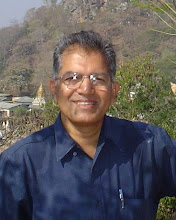
Philip McShane is Professor Emeritus at Mount St Vincent University, Canada, and is one of the five or six most important scholars in the thought of Bernard Lonergan (1904-84), Canadian philosopher and theologian.

Born in Ireland, Phil has a master’s degree in mathematical science (University College, Dublin, 1952-56). He notes that his original training was in theoretical physics, which included working with Lochlainn O’Raifeartaigh who later occupied the Schrodinger position in the Dublin Institute of Theoretical Physics.

After taking a master’s degree in philosophy (St Stanislaus College, Tullamore, Ireland, 1956-59), and another master’s degree in theology (Heythrop College, Oxon., England, 1960-64), he went on to take a doctoral degree from Oxford (1965-68) for his thesis on “The concrete logic of discovery of statistical science, with special reference to problems of evolution theory,” later published under the title, Randomness, Statistics and Emergence.

Subsequently he was Lecturer in mathematics at the University College, Dublin (1959-60), Assistant Professor of Philosophy at the Milltown Institute of Philosophy and Theology (1968-73), Associate professor of Philosophy (1974-79) and then Professor of Philosophy (1980-94) at Mt St Vincent University, Halifax, Nova Scotia, Canada, and First Visiting Fellow in Religious Studies, Lonergan College, Concordia University, Montreal (1979-80).

His interest in economics began with a request from Bernard Lonergan “to find [him] an economist” – to read one of his economics manuscripts.

His publications on economics include: Lonergan’s Challenge to the University and the Academy (1980); Wealth of Self and Wealth of Nations (1994); Economics for Everyone: Das Jus Kapital (1998); PastKeynes PastModern Economics: A Fresh Pragmatism (2002); with Bruce Anderson, Beyond Establishment Economics: No Thank You, Mankiw (2002); and the recent articles in Divyadaan: Journal of Philosophy and Education 21/1 and 21/2, including editing the latter issue with the title Do You Want a Sane Economy?

He has lectured on economics at universities in Mexico, Colombia, the United States, Canada, Ireland and the United Kingdom.

At present he is directing research projects on the relation between economic theory and law, education, environmental problems and world hunger.

Among his other publications are the following: The Shaping of the Foundations (1976); A Brief History of Tongue: From Big Bang to Coloured Wholes (1999). A more complete list may be obtained at www.philipmcshane.ca; several items are also available online.

Besides publications, there are a very large number of “online publications” with strange names: Bridgepoise, Cantowers, Sofdaware, Quodlibets, Joistings, Eldorede, Prehumous, Lonergan’s Model, Method in Theology: Revisions and Implementations, Humus, Field Nocturnes, SURF, Fusion. All these are also available at www.philipmcshane.ca.

His wide range of interests reach out from mathematics, physics, botany, economics and Lonergan to include music, poetry and literature. The music and the poetry are, in fact, continually invading all his writings, which are often characterized by a Joycean mangling of language.

At present, pushing 78, Phil lives in Vancouver with his wife Sally.

I think it would not be wrong to describe Phil as a brilliant man of volcanic energy and enthusiasm, with a passion for the implementation of Lonergan’s project.

We are privileged to have you with us, Phil. Welcome!


PURPOSE OF THE WORKSHOP

The purpose of the workshop is to propose the elements of a new economic order, or to move towards a massive restructuring of present economic praxis.

To speak of a new economic order, or a restructuring of present economic praxis, is to imply that present economic order and praxis are less than satisfactory.

Is that true?

The chief resource person of the present Workshop is convinced that it is.

In support of his stand he might quote from Schumpeter who spoke of the fundamental need for economic theory to ‘cross the Rubicon’: by ‘crossing the Rubicon Schumpeter meant replacing current static economic analysis “by a system of general economic dynamics into which statics would enter as a special case.” [J. Schumpeter, History of Economic Analysis (New York: OUP, 1954) 1160. xxv.]

The elements of the proposed new order or massive restructuring are to be found in the work of Canadian philosopher and theologian Bernard Lonergan. This itself is a strange thing: the very tall claim that a rank ‘outsider’, a layperson in the field of economics, might have something so revolutionary to suggest. But let that pass.

I quote from the blurb of the volume of Lonergan’s Collected Works edited by McShane, For a New Political Economy: “Lonergan’s concept of economics differs radically from that of contemporary economists and represents a major paradigm shift. He takes a fresh look at fundamental variables and breaks from centralist theory and practice, offering a uniquely democratic perspective on surplus income and non-political control.” [Blurb, FNPE, CWL 21.]

“He takes a fresh look at fundamental variables.” That statement could be illustrated by turning once again to Schumpeter, and here I quote from McShane’s Introduction:

Both in his Theory of Economic Development and in his Business Cycles: A Theoretical, Historical, and Statistical Analysis of the Capitalist Process, Schumpeter begins from the dynamics of a stable economy and moves to a consideration of the ‘destabilizing’ effect of entrepreneurial activity. Lonergan, however, focuses immediately on such activity, particularly in its occurrence on the massive scale associated with economic cycles, revolutions, surges. He approaches that focus armed with precise analytic distinctions between basic and surplus activities, outlays, incomes, etc., and it is extremely important to note that these distinctions are equally relevant also to the understanding and control of an economy without major surges. [FNPE xxv-xxvi.]

Lonergan, in other words, begins not from static analysis, but from dynamic analysis: an economy in which entrepreneurial activity is the normal thing.

He brings to this analysis precise distinctions between basic and surplus activities, outlays, incomes, etc.

Such a dynamic analysis is equally relevant “to the understanding and control of an economy without major surges”; in Schumpeter’s words, it is “a system of general economic dynamics into which statics would enter as a special case.”

So this Workshop is not going to enter immediately into practical problems of solidarity, justice, etc. The conviction behind this is that we have to first understand correctly the workings of the economy, before we can talk about What can be done, or What should be done. To put it more starkly, Lonergan and McShane are convinced that economics has not yet become a science. They are not alone in this: I have been quoting Schumpeter, but I could also quote Joan Robinson to that effect, and Robinson, I should note, was Amartya Sen’s doctoral guide.

But enough of that. Let me end with two points.

The first is that the approach of this Workshop will be largely to avoid global and total presentations of Lonergan’s view, and to take instead little steps towards that view. Thus McShane will begin by analyzing a small business, and then go on perhaps to introduce the ‘real economic variables’: the basic and surplus circuits, the corresponding flows of payments, the notion of credit, the idea of money, etc.

The second is the underlying conviction that the goal of the economy is not “making money”, but rather, improving the standard of living for all. And that, I am sure, this audience will agree is a worthwhile goal.

Thank you. 

(Ivo Coelho)

Wednesday, 8 September 2010

Schumpeter: from statics to dynamics in economics

Schumpeter spoke of the fundamental need for economic theory to ‘cross the Rubicon’. ‘By “crossing the Rubicon,” I mean this: however important those occasional excursions into sequence analysis may have been, they left the main body of economic theory on the “static” bank of the river; the thing to do is not to supplement static theory by the booty brought back from these excursions but to replace it by a system of general economic dynamics into which statics would enter as a special case.’ [J. Schumpeter, History of Economic Analysis (New York: OUP, 1954) 1160. P. McShane, Introduction, For a New Political Economy, CWL 21, xxv.]

Tuesday, 7 September 2010

McShane interacting with the SYBPh class

Phil McShane came to my first class (Philosophy of Knowing) this morning and had an informal interaction with the students.

Someone asked him how he came to Lonergan. He said he had been given the text of Insight to read even before it was published. Later, Lonergan had come over to Dublin to give 5 lectures, and Phil had been in charge of seeing to his room and so on. That was when he first met Lonergan. He remembered that Lonergan had a book open on his desk: it was an Agatha Christie detective novel!

Lonergan, he said, loved jokes, and Phil and he would exchange a joke whenever they met. Phil told us the one about the Irish wake. After a little whisky, one of the mourners decided to go in and pray at the coffin. He went in, but the whisky had been strong, and he went quite past the coffin and landed at the harmonium (there was, it seems, usually a harmonium in the 'priests' room' which was also used to lay the body). Well, the man knelt down, prayed at the harmonium, and then went back to his friends. "What a lovely set of teeth the dead man had," he said. Lonergan loved to repeat this Irish joke later on.

Another student asked about the new book Phil was planning to write, on Physics, Economics and History. That gave Phil a chance to speak about how he came to Lonergan's economics.

He had his background in mathematics (Dublin) and philosophy (Oxford). At Heythrop he was able to meet Fr Louis Watts, the priest who had introduced Lonergan to economics during his Heythrop days. In 1968, Phil received a postcard from Lonergan: "Find me an economist who can read my manuscript." A day later he received another postcard saying much the same thing. Lonergan had written the essay in 1944. He had spent 10 years reflecting on the matter. He had given it to Eric Kierans, later minister for finance in the Trudeau cabinet in Canada; Kierans did not get round to reading it. Phil said he himself had spent 20 years trying to read the manuscript; finally it had begun making sense. But he was still on the lookout for an economist; he was hoping that the Nashik conference would inspire someone to either find one or become the one.

Economics today is in the position of Ptolemaic astronomy with its epicycles: they could make certain predictions with that kind of thing, but it would be impossible to send someone to the moon on that basis. But humankind changes very slowly. Ptolemaic astronomy reigned for a thousand years. Economics has been around for 200 years. Perhaps it will begin changing now. Lonergan's aim was to transform economics into a proper science.

Monday, 6 September 2010

Lonergan on Basic and Surplus Goods & Services

"The key to appreciating Bernard Lonergan's economic theory is to understand how he sharpens the orthodox distinctions between producer goods, consumer goods, and capital and then goes on to fully exploit the distinction he draws. [Orthodox economists also draw these distinctions, but their distinctions are not precise, and they are not basic to their analysis as they are for Lonergan.] The particular distinction Lonergan draws is one of the fundamental building blocks of his theory." [McShane and Anderson 23.]

"[O]rthodox economists think unclearly of producer goods as used in the production of consumer goods. An example is the use of sheet metal in automobiles. Sheet metal, for them, is a producer good that is used to make consumer goods, ie automobiles. For Lonergan, however, what determines whether a good is classified as basic or surplus is its use when it is sold as a finished product." Thus a table saw bought by a home handyman is a basic good; the same saw bought by a carpenter is a surplus good. [McShane and Anderson 25.]

Money is not the centre of an economy

"Orthodox economists would have us believe that money makes the world go round. The more money you make the better. the higher a corporation's profits the better. The bigger a country's GDP per capita the better. The greater the NASDAQ Index the better. Lonergan, by contrast, holds a different view. In his opinion, money & finance should not be considered the centre-piece of an economy. Rather, money & finance should meet the needs of the production. Production should not be manipulated to meet the needs of finance." (McShane and Anderson, Beyond Establishment Economics: No Thank You Mankiw [Halifax: Axial Press, 2002] 28.)

Saturday, 4 September 2010

New book by McShane: physics, economics, history

Just went through - went through is the right word, I went through it without really pausing, slowing down, attempting to digest - McShane's proposal for a new book, with the title Bernard Lonergan's View of Physics, Economics and History: A Heuristic Gauging Structure for Human Ecological Survival. McShane received a rather encouraging reply from his prospective publishers just as he was setting out for the airport to come to India, and so forwarded the mail to me, with a request for a printout, and an invitation to read on if I could. I did. Impressive.

Impressive first of all because, while there is much Philtalk, there is much less of it than is usual. On the whole the proposal reads beautifully, and does communicate without too much unexpected (Joycean) jargon.

What is Phil trying to do? "To break through to a heuristic of history" by drawing on and then expanding Lonergan's writings. The expanding will involve creative integration from the two sciences that were Lonergan's greatest interest: physics and economics, the one a natural science and the other a human science.

More specifically, the project intends to follow Lonergan's advice to select "the conspicuously successful science of our time" - which is physics, and to use it to lift up the conspicuously unsuccessful science - which Phil identifies with economics. And all this, in the service of working out "an integral heuristic of history." Thus: "The writings of O'Raifeartaigh are key here: can I lift O'Raifeartaigh's work, both in physics and in the heuristics of dialectic, to a level where I can identify, heuristically and effectively, a future dynamics of both physics and economics that I discern in the history of macro-hydrodynamics[,] a history which powerfully nudges us to conceive of a beginning of ecologically-responsible economic dynamics?"

Economics as a non-science is, I think, one of the claims made by Lonergan and pushed by McShane in many of his works, including the recent issue of Divyadaan: Journal of Philosophy and Education 21/2: Do You Want a Sane Economy? edited by him.

He wants to do for economics (and for history), I think, what Lochlainn O'Raifeartaigh did for gauge theory in physics, with his The Dawing of Gauge Theory and other works.

What is impressive are Phil's credentials: his original training was in theoretical physics; he went on to take a D.Phil. in Oxford; his interest in economics began in 1968 when Lonergan requested him to "find [him] an economist"; and his publication record is "excellent" in the words of the two editors of the current proposal.

But, but: what on earth is a heuristic of history? This is related to Lonergan's search for an integral heuristic structure, "a symbolic indication of the total range of possible experience". The sought after heuristic of history is "a key sub-structure of that search". In Lonergan's words, the problem of general history "is the real catch". The problem is fundamentally solved "by a functional specialist theoretic of the merging - through sloping up from isolated research - horizons of disciplines." "The core of the present project is the tackling empirically of that issue of sloping, in both history as lived and as written, in the disciplines of physics and economics and their ecological technologies."

And: why search for a heuristic of history? Hints: liberation from "contemporary myths of maturity of humanity or of science or industrialization"; reaching "a coherent and humble heuristic that is remote from contemporary disorientations regarding physics, economics and ecology"; a meshing of economic and ecological concerns in Lonergan's writings on history and economics that "anticipate elements of the openness of present leading ecologists, reaching out to a post-industrial culture of leisure, self-attention, and creative post-industrial and nano-innovation of such dimensions as would warrant the global implementation of Lonergan's pragmatics of long-term cyclic economic innovations"; "a beginning of ecologically-responsible economic dynamics".

Friday, 3 September 2010

Introducing the Economics Workshop

Gave a brief presentation of "Do You Want a Sane Economy" (Divyadaan: Journal of Philosophy and Education 21/2 [2010]) to the Divyadaan students last evening, as an introduction to the forthcoming Workshop "Towards a New Economic Order" by Philip McShane (9-11 September 2010).

As I write, Phil must have boarded his flight for Mumbai... He arrives early morning, 5 September. Should be here 6 September. A press conference is being planned for 1630 hrs, 7 September. Mr Deokar, Editor of Sakala, has taken a great interest in the matter, together with Mr Francis Waghmare.

The leading ideas:

1. Distinguish basic and surplus circuits: the basic circuit concerns consumer goods; the surplus circuit concerns producer or capital goods.

2. What is fundamental in the economy is production, not money. Money, while essential, has a redistributive function.

3. The aim of the economy is not therefore "making money." It is an improved standard of living for all.

4. Money is a promise, a note. The betrayal of this promise seems to be at the bottom of the current economic crisis.

5. The failure to understand the workings of the economy - and therefore the crisis - is the true fault. Economics has not yet become a genuine science. Most economists and textbooks concentrate on money. They should recognize that production is basic. They have to identify the real variable. Then economics would become a science.

The 8 articles in Divyadaan attempt to introduce the real variables of economics in a very simple way, often appealing to simple businesses that do not involve money, somewhat in the manner that Wittgenstein's language-games at the beginning of his Philosophical Investigations. Thus McShane introduces the notion of credit; Brown the related idea of keeping promises; Shute the economic variables; O'Leary brings in money, and talks about what happens when the basic and surplus circuits are not balanced; and Zanardi the goal of the economy as making sense rather than making money. McShane rounds up with the call for genuine understanding, true theory.