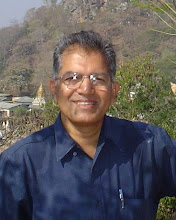
Luca Badini Confalonieri is a young Italian, completing his doctorate on ecclesiology at the University of Durham, England, and currently a Lonergan Fellow. He shared his findings at the Lonergan Workshop yesterday in a paper entitled "The Critical Use of Socio-Political Categories in Ecclesiology." An extremely well-delivered paper; Luca has the gift of making a connection with the audience. However, my impression is that he has forgotten to take into account the 'wisdom that comes from the Holy Spirit,' and that there is a way down in addition to the way up. The way I heard him, he seems to have said (especially in his responses to questions) that the magisterium has no right to make any doctrinal decisions apart from the findings of theologians. I do think a man like Aquinas was clear that there is a light that is different from the light of intellect, and that prophecy and magisterium are instances of such light. I also remember Lonergan clearly making a distinction between the theological process and the doctrinal or dogmatic process.... And I think this position does transpose, though not simplistically, into Method in Theology.
Luca relies much on the work of Komonchak on ecclesiology. Komonchak is a Lonergan scholar who uses Lonergan's insights for his work on ecclesiology. But I think he does forget that, besides the inner word, there is also the outer word. Catholic theology is marked by the complex interaction between inner and outer word: the inner word of the Spirit enabling the recognition of the outer word of revelation, and of the Word that is Jesus; and the fact that this recognition is an ecclesial rather than an individual recognition. But I have to do more work to get clear on this. All I remember now is that, at the end of the Rome Lonergan Conference, Fred Lawrence had passed this comment: people are forgetting the outer word....
Showing posts with label church. Show all posts
Showing posts with label church. Show all posts
Saturday, 27 June 2009


Tuesday, 23 June 2009
The messiness of the human good
Eugene Ahner pointed out yesterday that ideas are abstract, but the good is concrete, which is why ideas can be clear and wonderful, but the good tends to be messy and ambiguous. Which explains why a thousand reasons can be brought against concrete realities like the Church, and religious congregations, and any concrete action. Any good short of God will be less than fully good, and therefore susceptible to criticism. But humility - recognition of our creature status - demands that we act and do the good that has been assigned to us. We are not the Messiah; we are part of the Body that is the Church, with our particular roles and tasks.
Subscribe to:
Posts (Atom)